
Otero County Blotter Sources
The Otero County Sheriff's Office publishes no rolling 72-hour, weekly, or multi-day arrest log. The Otero County Sheriff's Office page is still the official county entry point. However, it lists no online blotter. So no county-wide posting schedule, archive depth, or photo policy can be claimed.
The records are scattered instead. La Junta Police puts out a monthly dispatch bulletin. Rocky Ford Police posts weekly activity totals. Fowler Police handles case-specific records requests. The courts hold the case files, and local news picks which events to cover. None of these equals a jail booking roster.
Dates work differently in each one. A La Junta entry may pair a reported time with a later outcome. Both sit inside a monthly file. A Rocky Ford figure sums a week without naming anyone. A Fowler request starts from a known incident, name, date, or report number. OCSO keeps jail bookings; city departments keep their own incident records. Keep those roles straight. That stops a police call, a booking, and a court filing from blurring into one false timeline.
| Source | What it shows | What it does not show |
|---|---|---|
| OCSO | Telephone custody verification and records routing | No verified public rolling arrest log |
| La Junta bulletin | Monthly calls, event data, and disposition labels | Not a live jail roster or confirmed photo feed |
| Rocky Ford summaries | Weekly police activity counts | No searchable named arrest list |
| Fowler records | Case-specific request route | No public online blotter |
| Local news | Selected event reports, sometimes with sourced photos | Not complete or official custody data |
Read Otero Arrest Reports
Start with two anchors: who published the record and when. A monthly police bulletin can help you piece together city events across Otero County. A court docket picks up the story later. It takes over once a case reaches a judge. News coverage adds color. A story's date rarely matches the actual arrest or booking time, though. So work backward, keeping the agency and the date in view every step.
- Choose the city source. Use La Junta's monthly bulletin, Rocky Ford's weekly summary, or Fowler's records form as appropriate.
- Match the event. Compare the event number, report date, agency, call type, and disposition without assuming that each call led to booking.
- Confirm the jail record. Contact OCSO at 719-384-5941 to ask about current or former local custody.
- Check the court path. Search the official docket by county and date, then request the case file if a final disposition is needed.
- Preserve provenance. Record the source URL, access date, and whether the item is police, jail, court, or news material.
Need arrests from today? Use the Arrests Last 24 Hours route for live custody checks. A blotter search fits the wider, multi-day question instead.
Otero Blotter Entry Fields
La Junta's bulletin offers the clearest field set in Otero County. A single entry may list an event number. It may also give the reported date, a complainant name, and the city. A grid or subgrid can appear, along with the report time, the call type, and a disposition. Some dispositions read simply as adult arrest or warrant arrest. Keep in mind the bulletin's own caution. The call label may not match how things ended.
| Field | How to read it |
|---|---|
| Event number | Police reference, not a jail booking number |
| Date and report time | Dispatch reporting point, which may differ from arrest and booking |
| Call | Initial type of service, not necessarily the outcome |
| Disposition | Recorded resolution, which may note an adult or warrant arrest |
| Agency | Police source of the event, which may differ from the jail custodian |
| Alleged charge | Must be confirmed in the booking or court record |
For something that may have happened today, the Arrests Last 24 Hours route is built for quick custody checks. A blotter search answers the broader multi-day question. It is not a live status tool.
Otero Weekend Posting Gaps
Otero County has no official rule for weekend or holiday posting. Anyone promising a Monday batch or a fixed daily refresh is guessing. La Junta's monthly bulletin naturally gathers many days into one release. Rocky Ford's weekly format does the same thing. It just works on a smaller scale. News runs on its own cycle, often appearing long after the underlying arrest.
Those gaps can create clusters that say more about publishing than about arrests. Count the date each event occurred when it's listed. Story dates and upload dates are not booking dates. For custody questions, phone OCSO. For case progress, go to the judicial record.
Otero Arrest Archive Paths
How far back Otero County archives reach depends on the record keeper. La Junta's page shows a July 2025 bulletin. That single item proves nothing about retention. Rocky Ford posts weekly summaries. It has no searchable historical arrest database. Fowler's request form opens a records path but no public archive. OCSO publishes no booking-record or photo retention schedule.
For older arrests, ask the custodian directly. Ask for the series name, date range, retention period, destruction authority, archive-transfer rule, and whether a contractor hosts the jail system. The county moved between older and newer detention facilities, so ask whether booking records and photos were merged into one database. A missing search result answers none of that.
The Colorado State Archives finding aids list broad terms like county jail arrest records. A hit does not prove modern Otero booking files sit there. Current bookings belong with OCSO. Court files rest with Otero Combined Court. Old newspaper reports stay with the historical newspaper collection.
Note: A released person may drop off a custody source while a court case, city bulletin, or news story stays public far longer.
News Is Selective Arrest Coverage
SECO News stands out as the best digital outlet for Otero County law-enforcement stories. Its press-release archive pulls from OCSO, La Junta, Rocky Ford, Fowler, and joint task-force work. Coverage runs on demand rather than a set schedule. Individual stories name charges and credit the jail that supplied a booking photo. One detail worth noticing: a Rocky Ford story credited Bent County Jail. A Fowler story credited Otero County Jail. The SECO News Fowler arrest report attributes each booking image to its article. It does not offer a complete county feed.
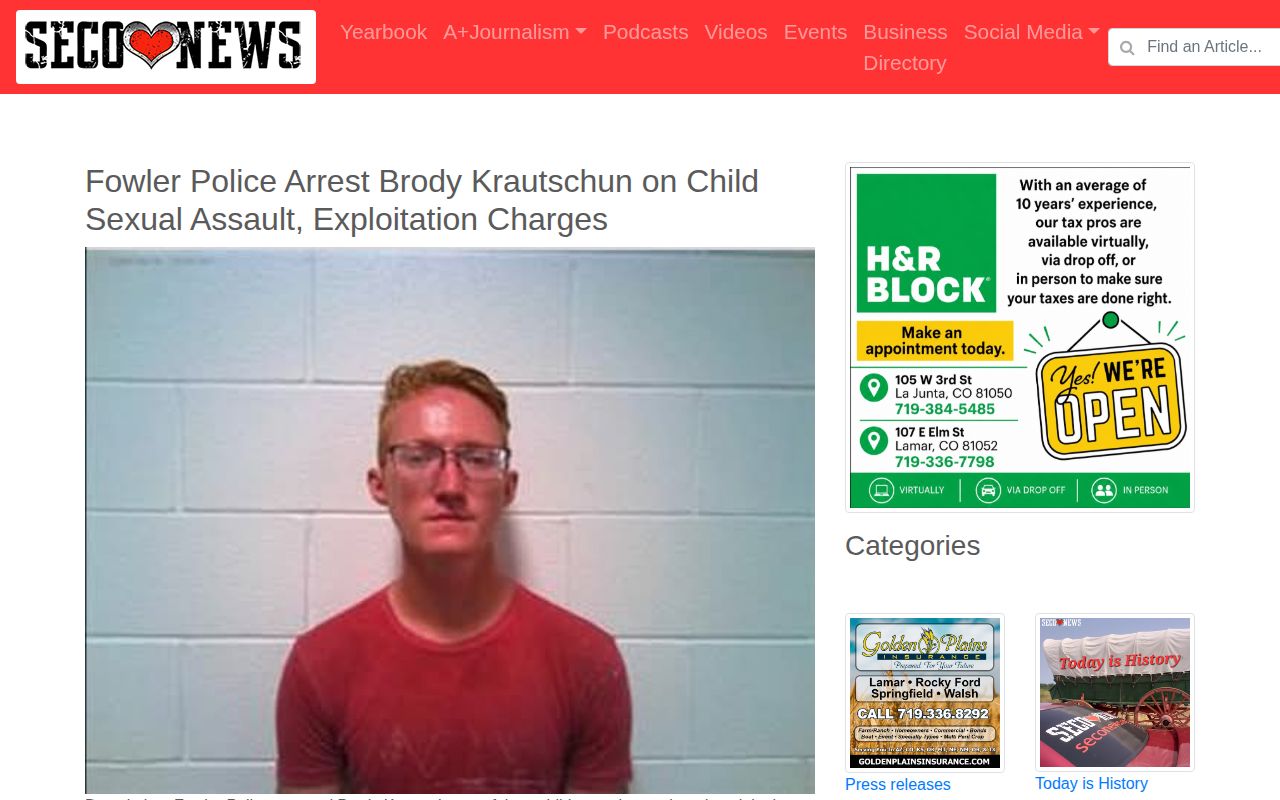
The Tribune-Democrat and regional stations cover selected Otero County events too. Their archives help you find a particular arrest. Neither one publishes a fixed, complete arrest log. Treat news as a secondary source that may be incomplete. Official agency and court records come first for any factual check.
The SECO examples also prove a booking facility cannot be guessed from the city alone. Fowler arrests landed at Otero County Jail. A Rocky Ford arrest went to Bent County Jail. Each report describes one event. It is not a standing policy for arrests from that town. When you cite a story, keep the article date, the charge wording, and the named arresting agency together. Add the photo credit as well. Then confirm custody and the case with the responsible government offices. An archive search that turns up nothing means the outlet ran no story. Silence is not a record.
Otero Arrests and Dispositions
A blotter often stops at the police response. A booking record stops at intake or release. The court file is what carries the case forward. Otero County docket filters cover first hearings, hearings on advisement, arraignments, appearances on arrest warrants, and sentencing hearings. Those events can happen after release, so a docket entry alone does not show current custody. The official Otero County docket is the route to what follows a booking.
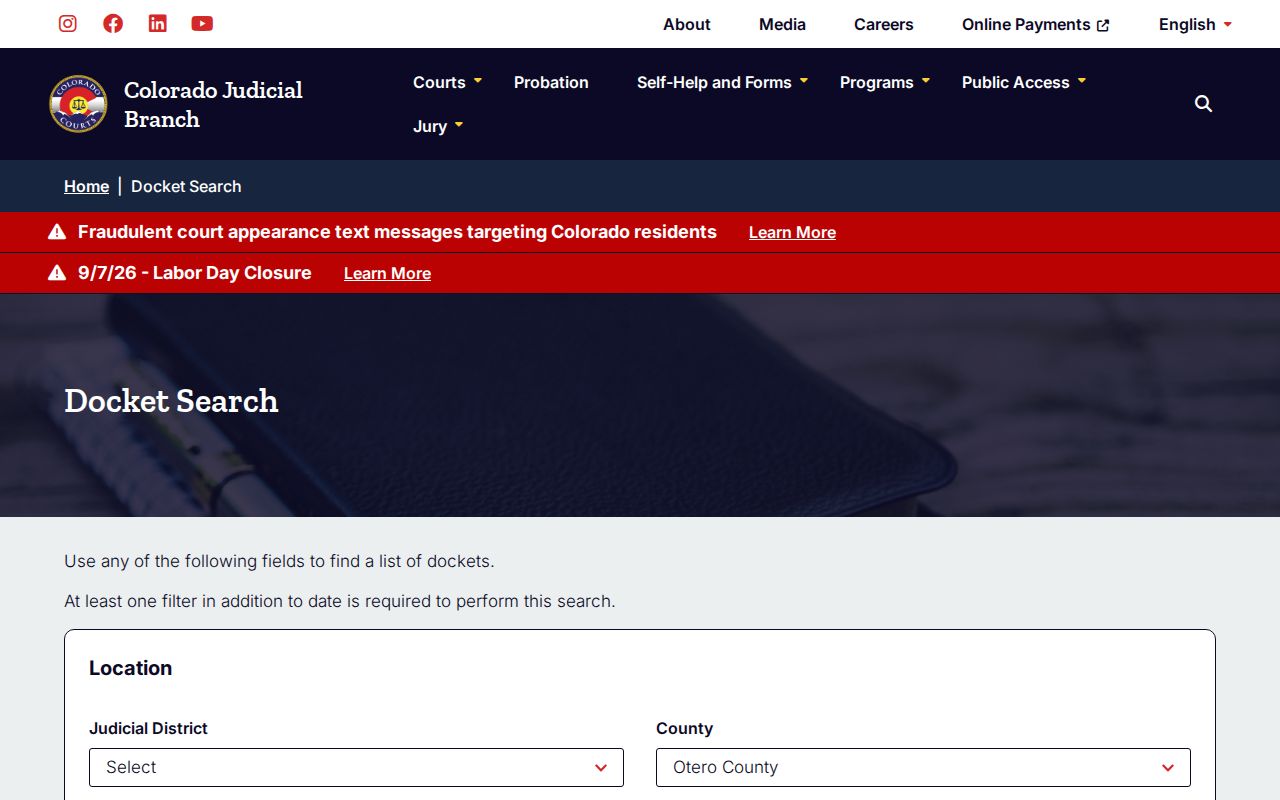
The court interface helps you locate proceedings. It does not verify jail custody or settle a final outcome on its own. When your date falls outside the visible docket window, use the Otero Combined Court document-request channel. Do not assume the case ended. Ask for the case number, the filed charge, the hearing history, and the disposition. Request them only if those records are public and releasable. Court copies and police reports stay separate requests. A later outcome should carry its own date and attribution. Never quietly rewrite the original arrest entry. That discipline preserves the historical record. It also shows clearly when a charge was reduced, dismissed, or resolved.
Public Record Search
Sponsored Results